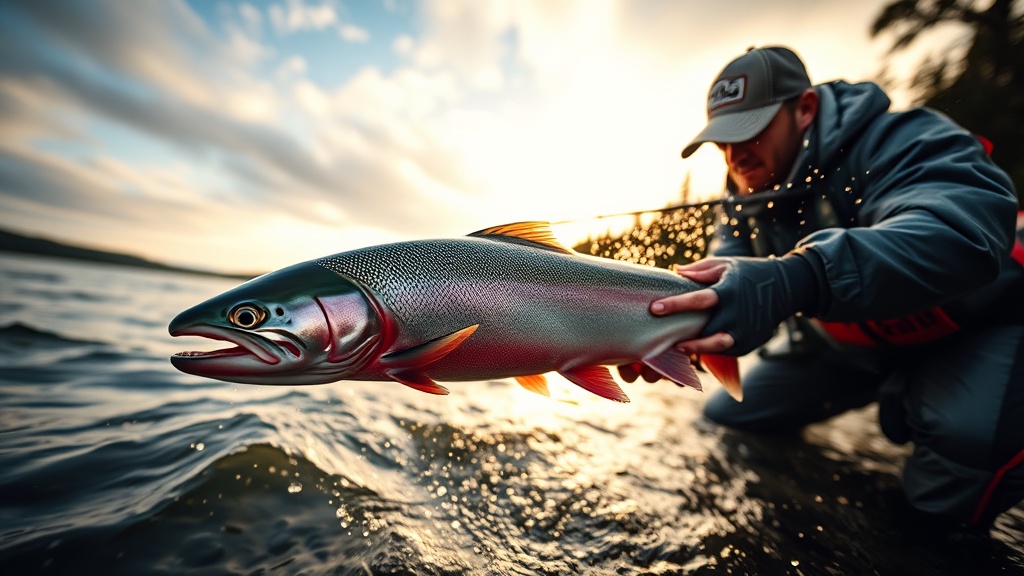
How to Catch Your First Salmon in Campbell River: A Complete Beginner's Guide

This guide covers everything needed to catch a first salmon in Campbell River — from gear selection and timing to techniques that actually work in local waters. Whether visiting from Vancouver or just getting started with saltwater fishing, the intel here comes straight from seasons spent on the Discovery Passage and the mouths of the Quinsam and Campbell Rivers. No fluff. Just what works.
When Is the Best Time to Fish for Salmon in Campbell River?
The peak salmon season runs from July through September, though Chinook (king salmon) start showing in earnest around mid-May and can hang on into October. July and August deliver the most consistent action — that's when multiple species overlap and the odds of hooking into something substantial hit their stride.
Here's the seasonal breakdown for the area:
| Species | Peak Months | Typical Size | Best Locations |
|---|---|---|---|
| Chinook (Spring/King) | May – September | 15 – 30+ lbs | Discovery Pier, Tyee Spit, Ripple Rock |
| Coho (Silver) | July – October | 6 – 12 lbs | Campbell River mouth, Quinsam Bay |
| Pink (Humpy) | July – September (odd years) | 4 – 6 lbs | Nearshore beaches, Discovery Passage |
| Sockeye | July – August | 5 – 8 lbs | Quinsam River (when open), Seymour Narrows |
The thing about Campbell River — the "Salmon Capital of the World" isn't just marketing. The confluence of the Campbell and Quinsam Rivers with the Discovery Passage creates a natural funnel. Salmon stack up here before heading to spawn. That said, timing matters more than almost anything else. Show up in March and you'll be casting into empty water. Show up in mid-July and you'll wonder why you didn't start sooner.
Reading the Tides (It's Everything)
Campbell River fishing lives and dies by tidal movement. The exchange between the Discovery Passage and the inside waters creates current seams that hold baitfish — which hold salmon. Most local anglers won't even rig a rod until they've checked the Campbell River tide charts.
Look for the "flood" tide (incoming) or "ebb" tide (outgoing) — the two hours before and after the tide change typically produce the best action. Slack tide? Usually dead. The water needs to move to stack fish in predictable spots.
What Gear Do You Need to Start Salmon Fishing?
You don't need a boat the size of a yacht — or a boat at all — to catch salmon here. But you do need the right tackle. Mismatched gear means lost fish, broken line, and a frustrating day on the water.
Rod and Reel Setup
For shore fishing at Discovery Pier or the Tyee Spit, a 9 to 10-foot medium-heavy salmon rod pairs well with a quality spinning reel. The Daiwa BG 4000 or Shimano Stradic FL 4000 both handle the saltwater environment and the screaming runs of a hot Chinook. Load it with 30-pound braided mainline — PowerPro or Sufix 832 work well — and tie on a 6-foot fluorocarbon leader in 20 to 25-pound test.
Boat anglers typically run levelwind reels like the Shimano Tekota 500 or Ambassadeur 7000i mounted on 8'6" to 10'6" mooching rods. Here's the thing: Campbell River guides almost universally prefer mooching over trolling for Chinook. It's quieter, more tactile, and lets you feel every headshake.
Lures, Bait, and Terminal Tackle
The local favourites haven't changed much in decades — because they work:
- Spoons: Gibbs Delta Koho in 3.5 and 4.0 sizes, especially the green nickel and blue nickel patterns. The Cop Car pattern (copper and brass) kills it on overcast days.
- Plugs: Tomic plugs in the #504 (pearl white) and #601 (chartreuse) sizes. These dive to 20 feet unassisted — perfect for casting from shore.
- Bait rigs: Whole herring or anchovy, cut-plugged and trolled behind a Hot Spot flasher. The glow white and green-on-gold patterns dominate here.
Worth noting: don't cheap out on hooks. The Gamakatsu Octopus in 4/0 or 5/0 sizes hold their points after multiple fish. Cheap hardware rusts overnight in this salt air.
Shore Fishing Essentials
If you're planning to fish Discovery Pier (the most accessible spot for visitors), pack a Frabill Conservation Series net with an extendable handle. The pier sits 20 feet above the water — you cannot land a salmon by the tail from that height. A drop net is mandatory.
Other must-haves: polarized sunglasses (Costa Del Mar or Maui Jim), a tide watch or app, needle-nose pliers for hook removal, and a cooler with ice. The BC sun reflecting off the water will burn you faster than you think — bring SPF 50 and a wide-brim hat.
Where Should You Fish in Campbell River?
Access points range from world-famous piers to quiet beaches most tourists never find. Each spot demands different tactics.
Discovery Pier
The pier sits at the mouth of the Campbell River, extending into the Discovery Passage. It's open 24 hours, free to access, and produces Chinook over 30 pounds regularly. The best water? Cast toward the green can buoy on an incoming tide — that's where the current seam stacks fish waiting to enter the river.
The catch? It gets crowded. Local etiquette matters here. Don't cast over someone else's line. Don't hog the corner spots for hours if fish aren't cooperating. And for the love of everything — don't high-stick a rod when a fish runs under the pier. (You'll lose the fish and probably your rod.)
The Tyee Spit
Just south of downtown, the Tyee Spit offers shore access with a bit more room to spread out. It's named after the Tyee Club — the legendary fishing club that requires members to catch a Chinook over 30 pounds on a rowboat with specific tackle restrictions. You don't need to follow those rules, but fishing near the club's traditional waters puts you in historically productive territory.
The gravel beach on the inside of the spit works well for coho in August and September. Cast spoons or spinners and retrieve just fast enough to keep them off the bottom.
Boat Launches and Charter Options
If you've got a boat — or want to hire a guide — the Campbell River Marina and Discovery Harbour Marina both offer public launches. For those without their own vessel, local charters like Chinook Shores or A Painter's Lodge provide half-day and full-day trips. Expect to pay $800 to $1,200 CAD for a full day with two anglers — expensive, but the learning curve collapses when you've got a veteran skipper putting you on fish.
Key boat spots include:
- The Hump: An underwater ridge off Quadra Island. Holds Chinook all summer. Troll 80 to 120 feet with downriggers.
- Seymour Narrows: Just south of Campbell River. Dangerous currents, but massive salmon staging here before pushing toward the Fraser. Best left to experienced boaters.
- Thurston Bay: Protected water on the east side of Sonora Island. Excellent for coho when the wind blows up the strait.
What Techniques Work Best for Beginners?
Salmon fishing has a reputation for complexity — downriggers, flashers, dodgers, teaser heads, scent trails. But beginners can absolutely catch fish with simple techniques. Here's where to start.
Mooching from Shore or Pier
Mooching sounds complicated. It's not. You drift a cut-plug herring (or artificial bait like a Brad's Super Bait) with a sinker heavy enough to hit bottom, then slowly reel it up about 10 feet and let it flutter back down. The key is the mooching reel — it releases line smoothly when a salmon picks up the bait, letting the fish run without feeling resistance.
Set the rod in a holder. Wait for the tip to bounce — that's a bite. Pick up the rod, let the fish run for three seconds (count it out: one-thousand, two-thousand, three-thousand), then set the hook with a smooth sweep. Not a violent jerk — salmon have soft mouths. You'll tear the hook out if you whale on it.
Casting Spoons and Spinners
Casting hardware from shore requires less gear and teaches you more about reading water. The technique is simple: cast beyond the structure you want to fish, let the lure sink to the strike zone (usually 10 to 20 feet), then retrieve with a steady, medium-speed crank. Add occasional pauses — salmon often hit on the drop.
Green, blue, and chartreuse dominate the colour spectrum here. Match the water clarity: bright chartreuse for murky water, more natural blue-green for clear conditions.
Float Fishing (When It Works)
In late August and September, when coho and pinks push into the Campbell and Quinsam Rivers, float fishing becomes deadly effective. Use a slip float setup with 12-pound mainline, a small split shot, and either a jig (1/4 to 3/8 ounce) or cured roe under the float.
The technique? Cast upstream, let the float drift naturally with the current, watch for it to dip or stop, set the hook. Coho crush jigs on the retrieve — short, sharp hops off the bottom trigger aggression strikes.
What Licenses and Regulations Apply?
Before you wet a line, you need the proper documentation. British Columbia's fishing regulations are enforced — and the fines for violations are steep.
You'll need:
- A Tidal Waters Sport Fishing Licence: Available online through the Fisheries and Oceans Canada (DFO) website or at local retailers like Sport Chek or Canadian Tire. A one-day licence costs roughly $7; annual is about $22 for Canadian residents.
- A Salmon Conservation Stamp: Required if you intend to retain any salmon. This adds about $6 to your licence cost. The stamp must be visibly attached to your licence.
- Species Identification Skills: You are legally required to correctly identify your catch before keeping it. DFO's species identification guide helps, but when in doubt, release it.
Current Regulations (Check Before You Go)
Salmon regulations change by season, area, and conservation concerns. As of recent seasons, the Campbell River area (Area 13) typically allows:
- Chinook: 2 per day, 4 possession limit (with specific size restrictions that vary by month)
- Coho: 4 per day in saltwater
- Pink, Chum, Sockeye: 4 per day combined
Barbless hooks are mandatory in most BC tidal waters. Bait restrictions apply in certain areas — particularly near salmon streams. The catch? These rules change mid-season sometimes. Check the current DFO regulations the morning you fish.
"The best salmon anglers aren't the ones with the most expensive gear. They're the ones who know the tides, respect the regulations, and put in the hours when the fish are actually there." — Local guide wisdom, overheard at the Tyee Club
Campbell River rewards preparation. Show up with the right gear, fish the right tides at the right spots, and that first salmon will come. It might be a scrappy pink salmon on light tackle, or it might be a 20-pound Chinook that peels line until your reel smokes. Either way, you'll remember the scream of the drag and the silver flash in green water. That's the addiction. That's why people keep coming back to this stretch of the Discovery Passage, season after season, chasing that first bite all over again.
Steps
- 1
Get Your Fishing License and Salmon Conservation Stamp
- 2
Book a Reputable Local Charter or Prepare Your Boat
- 3
Time Your Trip with the Tides and Salmon Runs